Looks like we are almost ready for one more push to Python development in GNOME 3, as originally announced by J5.
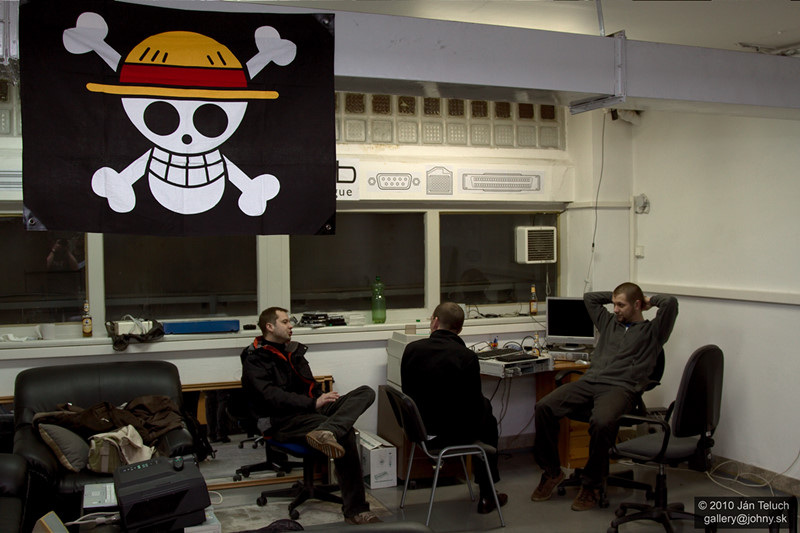
From 17th to 21th of January we'll be gathering at the brmlab hackerspace in Prague to hack on the applications of the brave souls that are taking the lead and port them to the future: Gtk+ 3, Python 3 and introspection.
We are having several GNOME volunteers, and Canonical, Collabora, OLPC, openSUSE and Red Hat are sending their people to lend a hand.
If you think you should be there, please act quickly and add your name to the wiki before J5 secures the budget. If you would like to contribute to the funds or in any other way that would help this hackfest become a success, please send email to the GNOME Foundation board.
Showing posts with label canonical. Show all posts
Friday, December 3, 2010
Wednesday, October 27, 2010
The cost of doing your own shell on top of GNOME
In this post, Dave Neary writes:
Just wanted to mention that the Sugar team never had more than 4 full-time paid developers (and most of the time far less than that), and this is relevant to this discussion because shows that with the right approach and knowledge in the team, the challenge doesn't need to be so insurmountable. As a comparison, I would be very surprised if the other GNOME-based shells mentioned would have had teams with less than a few dozens of engineers.
Now, Sugar as a project and its architecture were set up by the Desktop Team at Red Hat, composed by long-time and well-known GNOME hackers, of which most of them are now involved in the GNOME Shell, maybe not by chance.
With this I want to say that maybe Canonical has in their Unity team people with equivalent experience, who have shaped the GNOME project since its inception and thus know how to take this challenge. If that's the case, then I think they would have a bigger chance than what Dave concedes.
OLPC had many teething problems with the Sugar desktop environment. Bugs, stability and performance issues plagued the project for many months, to the point where they abandoned the development of the stack as the primary target platform for the devices. The project lives on in Sugar Labs, thans to a broad and vibrant developer community.-- snip --
There is another possibility which seems to me more plausible: building a rock solid and functional desktop is hard. Really hard.
Just wanted to mention that the Sugar team never had more than 4 full-time paid developers (and most of the time far less than that), and this is relevant to this discussion because shows that with the right approach and knowledge in the team, the challenge doesn't need to be so insurmountable. As a comparison, I would be very surprised if the other GNOME-based shells mentioned would have had teams with less than a few dozens of engineers.
Now, Sugar as a project and its architecture were set up by the Desktop Team at Red Hat, composed by long-time and well-known GNOME hackers, of which most of them are now involved in the GNOME Shell, maybe not by chance.
With this I want to say that maybe Canonical has in their Unity team people with equivalent experience, who have shaped the GNOME project since its inception and thus know how to take this challenge. If that's the case, then I think they would have a bigger chance than what Dave concedes.
Subscribe to:
Comments (Atom)